
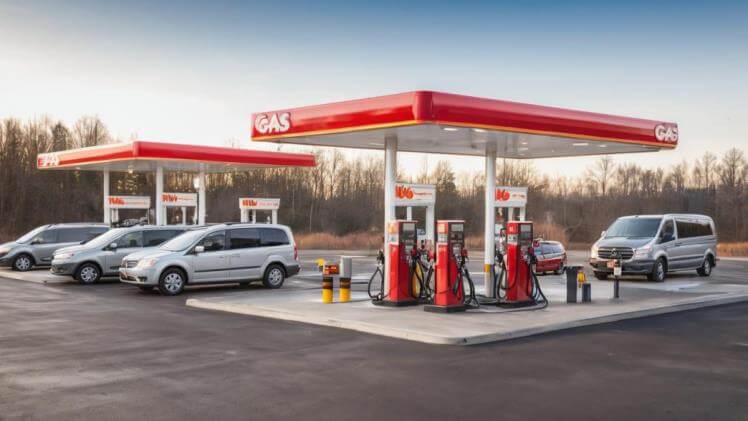
Fleet cards help achieve vehicle fleet cost savings by providing detailed tracking of fuel and maintenance expenses, enabling businesses to enforce fuel policies and monitor spending in real-time. Additionally, they often come with benefits like discounts or rebates on fuel purchases, which directly reduce operating costs and enhance overall financial management.
Top Ways to Reduce Fleet Costs
Fuel Efficiency Improvement
One of the most effective areas to target is fuel efficiency because it directly impacts your fleet’s operating budget. Fuel is a substantial part of your operational costs. Implementing a driver training program focused on fuel-efficient driving techniques can yield excellent returns. Techniques such as minimizing idle time, maintaining steady speeds, and practicing gentle acceleration can significantly enhance fuel economy.
Regular Maintenance Scheduling
Another cornerstone of cost reduction is implementing a robust maintenance schedule for your vehicles. Regular, routine maintenance is vital for keeping vehicles running smoothly and can save fleets from costly repairs down the road. Relying on fleet management software allows managers to efficiently track when each vehicle is due for service, ensuring timely maintenance that helps avoid unexpected breakdowns.
Route Optimization
Optimizing routes is another powerful way to minimize costs associated with fleet operations. Utilizing advanced route planning tools provides invaluable insights into reducing unnecessary mileage and associated fuel consumption. By analyzing data derived from GPS and telematics systems, fleet managers can pinpoint the most efficient routes for their drivers, effectively decreasing both wear and tear on vehicles and overall fuel expenses.
Imagine cutting your average travel distance by just a few miles each day across multiple vehicles—over time, those small savings accumulate into significant financial reductions.
Furthermore, leveraging fleet cards offers yet another layer of potential savings that can be seamlessly integrated into your overall cost-reduction strategy. The intricacies of how these cards function unlock further efficiencies in budgeting and expense tracking that are crucial for any fleet operator.
Fuel Cards in Fleet Management
Fuel cards play a pivotal role in modern fleet management, not just as a payment method but as a comprehensive solution that integrates fuel expense oversight with operational efficiency. By consolidating fuel purchasing into one streamlined system, these cards simplify the complexities of managing fleet expenses and provide insights that can drastically improve budgeting and planning.
Real-time Tracking and Reporting
One of the most significant benefits of using fuel cards lies in their ability to offer real-time tracking of transactions. This means that fleet managers can instantly access detailed data regarding fuel consumption — information crucial for identifying trends, monitoring usage patterns, and quickly spotting any irregularities. Such data is invaluable; it empowers managers to make data-driven decisions promptly, potentially leading to significant cost reductions over time.
For instance, with our WEX Fleet Card, it’s easier than ever for managers to view every purchase made by their fleet vehicles. With each transaction recorded with precision, details like the date, time, amount spent, type of fuel, and volume purchased are immediately available after the purchase occurs. This level of transparency helps ensure accountability among drivers and can help identify if certain vehicles have unusually high fuel expenditures, which could indicate inefficiencies or need for maintenance.
Improved Financial Control
Beyond tracking, fuel cards also provide enhanced financial control over spending. They allow fleet managers to set specific purchase limits on a daily, weekly, or monthly basis tailored to their operational needs. By implementing such controls, companies can enforce adherence to corporate fuel policies while preventing unauthorized spending that can significantly diminish profit margins..
Utilizing fuel cards provides a detailed overview of overall fleet expenses that can be scrutinized for potential savings opportunities. Each transaction logged is a chance for analysis; whether through examining which fuels are most cost-effective at various locations or identifying underperforming routes in terms of fuel efficiency. The potential benefits extend far beyond immediate cost reduction and lean towards enhancing overall operational performance.
As we explore the intricacies of expense management further, consider how tracking detailed financial data plays a vital role in maintaining fiscal responsibility within your fleet operations.
Tracking Fleet Expenses
Effective tracking of fleet expenses is crucial for managing costs more effectively. When you have a clear picture of how resources are being used, making informed decisions about allocations becomes possible. Utilizing technology can simplify and enhance this aspect of fleet management, allowing companies to keep a close eye on fuel expenditures, maintenance costs, and driver behavior. A deeper understanding of these factors translates directly into better budgeting and cost savings.
Consider these three technological solutions that can help track fleet expenses efficiently. Each offers unique benefits in terms of data collection and analysis:
- Telematics Systems: These provide real-time data on vehicle location, speed, fuel consumption, and engine status while flagging unusual patterns that could indicate rising costs or inefficiencies.
- Fleet Management Software: This software integrates with fuel cards and telematics to offer a comprehensive view of expenses, including ongoing breakdowns and potential savings opportunities.
- Mobile Apps: Designed for fleet management, these apps enable drivers to log expenses on-the-go, ensuring immediate updates to a central database—this means no more lost receipts or delayed reporting.
According to Frost & Sullivan, companies utilizing telematics systems can expect significant results—a 15% reduction in fuel costs and a 10% increase in fleet utilization. Investing in the right technology not only clarifies your financial standing but also actively contributes to reducing overall costs.
The tight integration between these tools provides visibility into all expense areas while empowering managers to make timely adjustments. For instance, if there’s an observable spike in fuel consumption from certain vehicles, targeted training can be provided for those drivers to improve their habits. This proactive approach fosters accountability among drivers and boosts overall efficiency.
As new technologies evolve within fleet management, embracing these solutions serves as a vital component to drive down operational costs while enhancing performance. This leads us to consider the next layer of insights related to optimizing financial operations for better outcomes.
Comprehensive Benefits of Fleet Cards
When businesses think about enhancing their fleet management, the focus often lies solely on cost savings. While that’s a legitimate concern, it’s essential to recognize that fleet cards also bring numerous other advantages that can significantly transform operational efficiency and effectiveness, ultimately leading to greater overall productivity.
Enhanced Accountability
One of the most significant benefits of fleet cards is their ability to foster enhanced accountability among drivers. Each transaction is meticulously tracked and tied directly to specific vehicles and drivers, making it easier to monitor spending patterns and detect any irregularities. This level of detail not only discourages misuse but also encourages responsible fueling habits. By utilizing fleet cards, businesses empower their drivers to take ownership of fuel expenses, aligning expenditures with company policies.
Streamlined Administrative Processes
If you’ve ever managed a fleet, you’re probably familiar with the burdensome administrative tasks involved in logging expenses and tracking receipts. However, fleet cards simplify these cumbersome processes immensely by automatically recording transactions.
This digital logging means no more manual receipt collection or tedious data entry—time-consuming activities that often lead to human error or discrepancies. Instead, the time saved can be redirected towards more strategic planning and operational enhancements, which are crucial for fleet success.
In addition to saving time on administrative work, fleet cards also provide valuable historical data that significantly enhances financial forecasting.
Better Financial Forecasting
With access to historical transaction data through fleet cards, managers gain invaluable insight into spending trends over time. This analytical ability is vital for effective financial forecasting and budgeting. For instance, understanding peak fuel usage periods allows managers to allocate resources more efficiently or identify opportunities for additional cost savings. Ultimately, these insights help create an informed financial strategy that supports the overall goals of the business while optimizing operational efficiencies.
While each of these benefits contributes substantially to improving fleet operations, it’s crucial to consider how careful selection of these tools can further bolster efficiency.
Boosting Fleet Efficiency with Technology
Leveraging technology is no longer a luxury but a necessity for modern fleet management. Integrating advanced solutions can lead to reduced operational costs and significant boosts in productivity and efficiency. One of the primary technologies revolutionizing this sector is telematics. Telematics refers to the use of telecommunications and monitoring systems that integrate vehicle location data and performance statistics, giving fleet managers unprecedented oversight over their operations.
Telematics and GPS Tracking
Imagine having a bird’s-eye view of all your vehicles in real-time. GPS tracking systems play a crucial role by providing updates on vehicle locations. This information enables better decision-making regarding route planning, ensuring timely and efficient deliveries. When a driver knows the most efficient route to take based on real-time traffic conditions, it minimizes fuel wastage and cuts down on driver idle time—essential for maintaining a healthy bottom line.
Moreover, access to historical data allows fleets to analyze driving behavior patterns, leading to improved safety and reducing wear and tear on vehicles.
Automated Expense Reporting
Another game-changer is automated expense reporting. By integrating automated systems with fleet cards, the need for manual entry is virtually eliminated. Human error in logging expenses can be costly, consuming both time and resources. Automated systems streamline this process, allowing for more accurate tracking of transactions while saving valuable administrative hours that can be redirected toward more strategic tasks.
Beyond these fundamental technological advancements, other tools can significantly contribute to enhancing fleet efficiency and reinforcing cost-saving measures across fleets. The wisdom lies in understanding which technology aligns best with your specific operational needs.
Incorporating innovative technologies empowers fleet managers to optimize their operations and maximize budget effectiveness efficiently. This strategic approach not only results in cost savings but also enhances overall fleet performance.
